

Politics & influence
When support is bought.
We traced the paid influencer campaigns behind apparently spontaneous political support.
Read the investigationWe connect people, narratives and behaviour to understand how conversations develop and what shapes them.
Our Stigmergy framework follows the traces that shape a conversation: what people say, how they connect and what changes over time.
Explore audience and market research




AI research via
Custom collections
01Map the narrativesHopes and concerns
A mine is proposed near a rural community. An independent study follows the debate about what it could mean for the area.
Jobs and investment feature alongside concerns about water, land and who will benefit. The discussion reveals several possible futures for the area, and different views about which are desirable or credible.
Loading research view…
02Trace the connectionsCompeting priorities
As the debate develops, people can welcome new work and worry about the effect on their land or water at the same time.
Job seekers discuss access to work, farming households raise water concerns, and local firms question how contracts will be awarded. Their connections reveal shared interests and differing priorities that a single community label would obscure.
Loading research view…
03Interpret the patternsConditions for support
Confidence in local jobs grows, while views on water protection and residents having a say become less favourable.
Welcoming one possible benefit does not settle views on the project as a whole. The independent picture makes agreement and disagreement visible, so public discussion can address the unresolved questions before decisions are made.
Loading research view…
Your question sets the field.
Our Stigmergy framework follows the traces that shape a conversation: what people say, how they connect and what changes over time.
Your question determines which sources belong in the research.
AI research via
Custom collections
Opening the conversation map…
We separated accounts that mainly boosted political figures from accounts taking part in ordinary conversation.
A small layer of accounts repeatedly amplified a handful of high-reach political voices. Amplification alone is not a measure of broad public support.
Read the analysis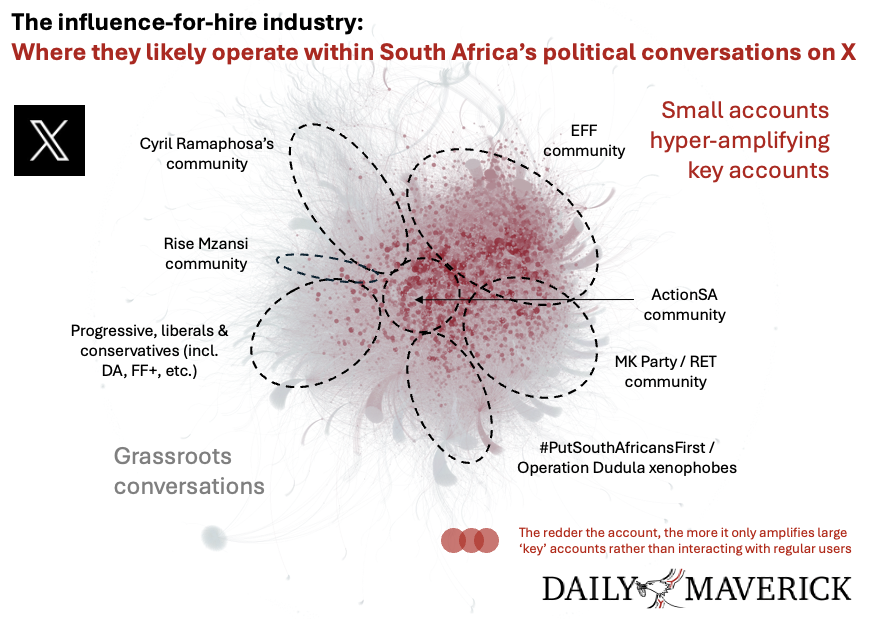
We compared two political conversation networks to see whether media accounts sat inside partisan groups or between them.
In the networks we studied, Kenyan news accounts sat within partisan groups, while South African news accounts formed a separate community.
Read the analysis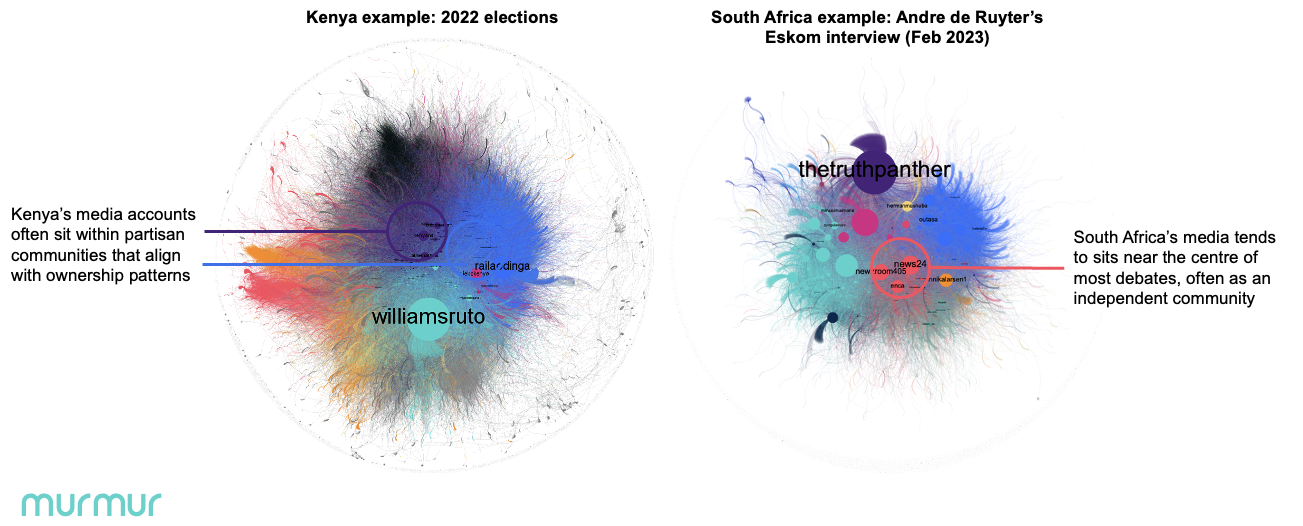
For a Konrad-Adenauer-Stiftung report, we analysed around 30,000 X posts about the Ebola outbreak in the DRC and Uganda.
In the May 2026 sample, health authorities and established media dominated the conversation. Misleading claims were present, but had not displaced these sources in the wider English-language discussion.
Read the report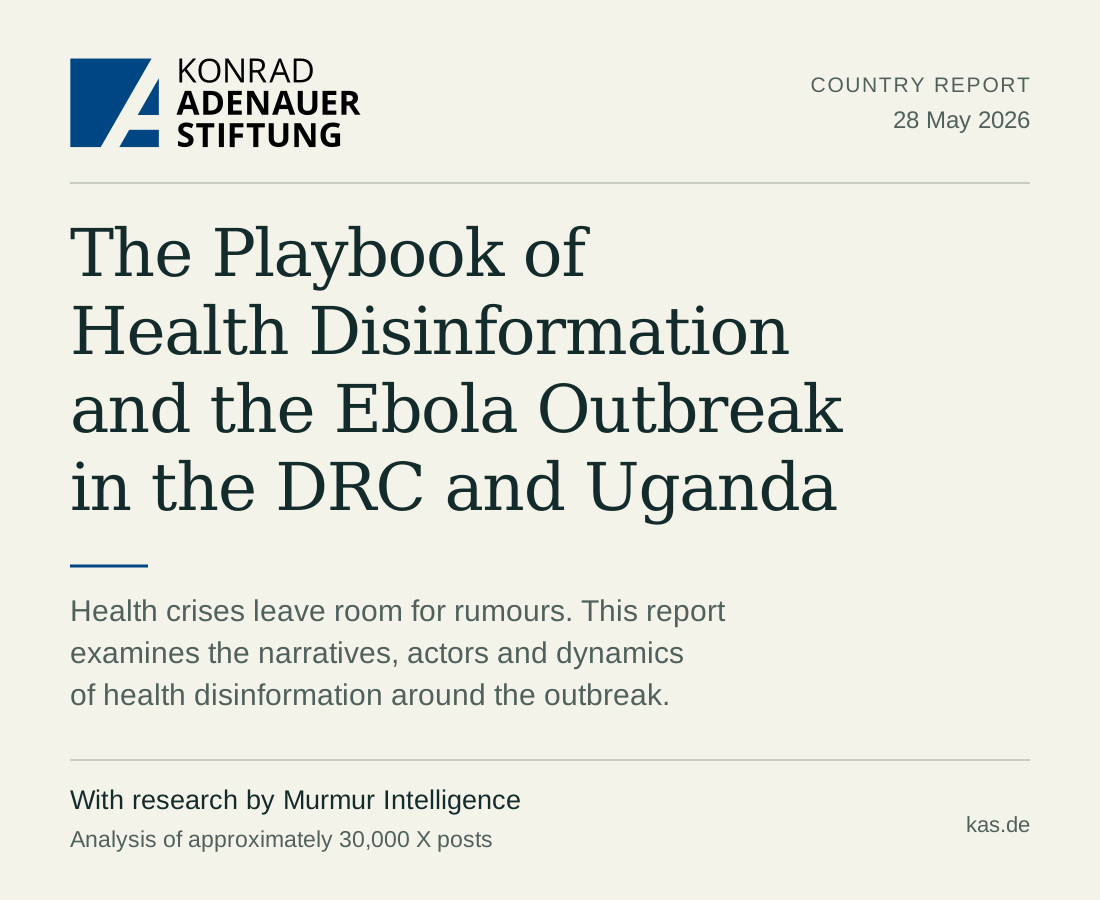
We tracked posts by, mentioning or retweeting suspected Guptabot accounts around the 2017 ANC leadership vote.
Activity peaked at 740 posts on 17 December, then fell to 98 by 22 December.
Read the analysisWe compared the hashtags used by the same online community before and after the MK Party launched.
The same community moved from EFF-linked hashtags to #VoteMK2024 almost overnight. The party was new; much of its online support network was already in place.
Read the analysis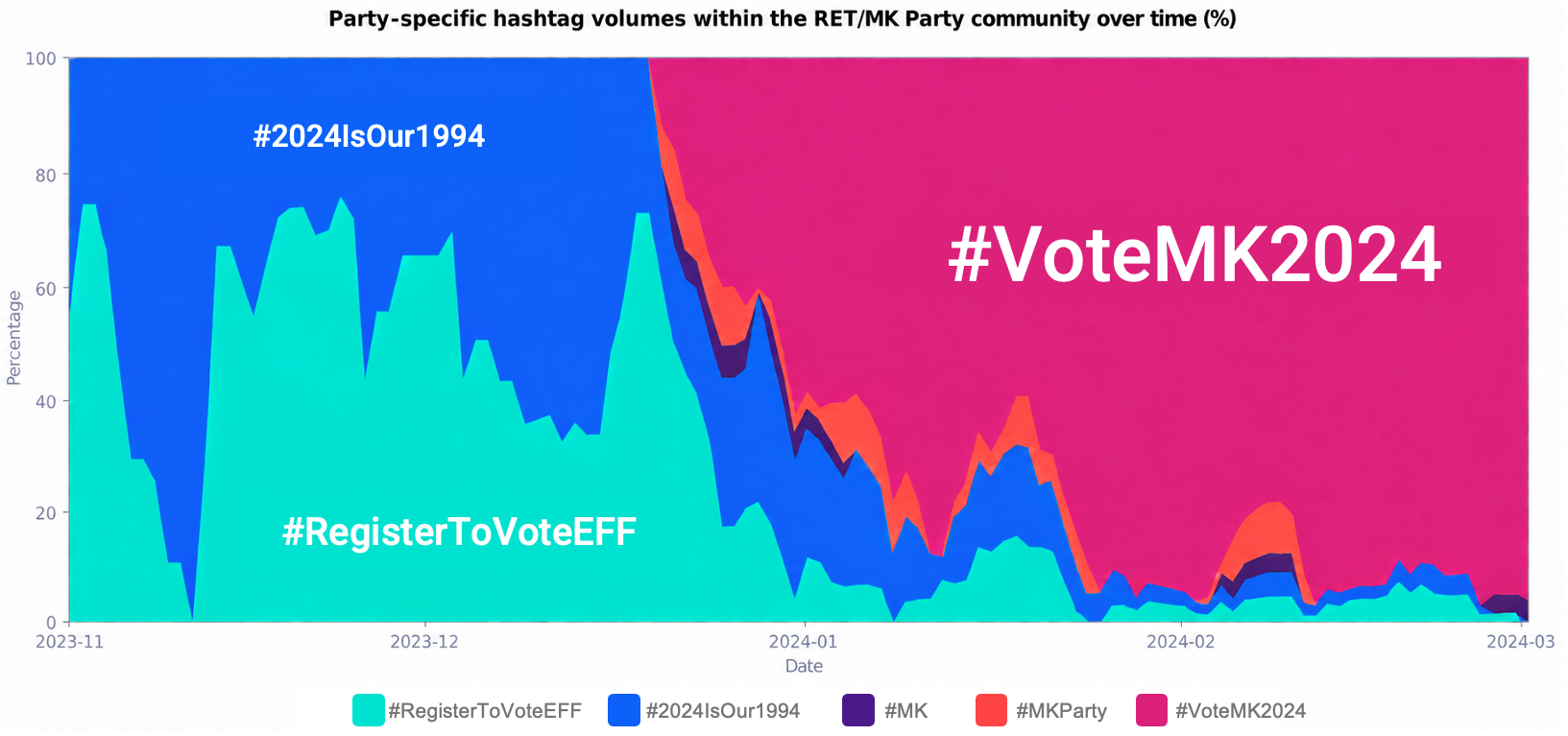
Research across elections, politics and consumer behaviour.
Research across South Africa, Kenya, DR Congo, Uganda, Nigeria, Ghana, Namibia, Senegal, Egypt, Thailand, Vietnam, Australia, Ethiopia, Czechia, France, Italy, Spain, United Kingdom, Brazil, Mexico, Mozambique, Zimbabwe, Germany, India, Niger, Zambia.
Politics & influence
We traced the paid influencer campaigns behind apparently spontaneous political support.
Read the investigationOur work spans commissioned and independent research.
Bring us the question.
We can work out how to investigate it.